A photography exhibition by author Josip Veber has been opened at the Museum of Herzegovina in Trebinje, organised to mark the 120th anniversary of the railway in this region.
PUBLISHED: 20.10.2021.
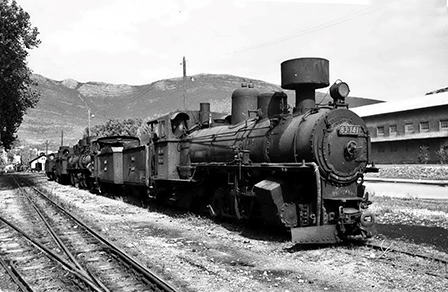
The photography exhibition "120 Years of Railways in Trebinje, Boka Kotorska and Surroundings", by author Josip Veber, was opened at the Museum of Herzegovina in Trebinje on Friday, 15 October.
In addition to representatives from the Railways of Serbia, the Railways of the Republic of Srpska, the Railway Transport of Montenegro, and the Maintenance of Railway Rolling Stock from Podgorica, the opening ceremony was attended by representatives from the municipalities of Trebinje and Herceg Novi, citizens of Trebinje, as well as media representatives.
On behalf of the Montenegrin railway companies, Dr Tripko Draganić, the chairman of the Board of Directors of "Maintenance of Railway Rolling Stock" from Podgorica, welcomed those present. He emphasised that the railway is a very important and complex system. By investing in it, the entire society can only benefit, both through the development of the economy and in bringing people closer together and connecting them. The railway has brought great prosperity to Montenegro and enabled faster development. The reconnection of these areas by railway would create conditions for the return not only of people but also of many factories and industries that successfully operated in these regions until not so long ago.
The author of the exhibition, Mr Josip Veber, collected the photographs displayed in this exhibition during his decades of fieldwork. He gathered the photographs by visiting railway museums in Belgrade, Zagreb, Ljubljana, Vienna, Budapest, and Nuremberg over the past several decades, as well as from railway enthusiasts and enthusiasts from Slovenia, Austria, and Germany, which were created in the 1950s, 1960s, and 1970s.
The first railway composition with high Austro-Hungarian state officials arrived in Trebinje on 16 July 1901 from the direction of Mostar and Gabela. On the same day, the railway also reached Zelenika in Boka Kotorska, and seven years later, in 1908, the first Montenegrin narrow-gauge railway line Bar – Virpazar was put into operation. This event was of immeasurable significance as the entire region was then connected via Sarajevo and Bosanski Brod, or Slavonski Brod, to the network of railways across Europe. A strong comprehensive development of the entire region followed, and thus the development of tourism began. Trains operated to Boka Kotorska until 29 June 1968. Eight years later, traffic was also discontinued on the line from Čapljina through Popovo polje to Dubrovnik and Trebinje.
However, the narrow-gauge railway has not been forgotten, and many routes of narrow-gauge railways through Herzegovina today feature cycling paths and promenades.
In Herceg Novi, the old railway tunnel between Meljine and Zelenika has recently been restored and is now passable, with a pedestrian and cycling path running through it. The station buildings in Zelenika and Herceg Novi have been preserved, as well as a beautiful railway bridge near the Zelenika port. At the initiative of railway enthusiasts, the NGO “Sinergija”, and with the help of the Municipality of Herceg Novi, a museum carriage has been placed along the railway line near the tunnel, which houses a café-gallery and represents a unique tourist attraction in Montenegro.
These historical photographs testify to the efforts, endeavours, and visions of past generations who, with almost no mechanisation, accomplished incredible construction feats and built the railway on a very challenging terrain. They serve as a reminder that we all must work even harder today and invest in the railway system, adapting it to the needs and demands of the present.
The exhibition is open until 24 October 2021.