At the invitation of the European Railway Agency, the Executive Director of ŽPCG, Dragana Lukšić, participated in the International Transport Forum Summit 2026 in Leipzig, one of the most significant international gatherings dedicated to the future of transport and sustainable mobility.
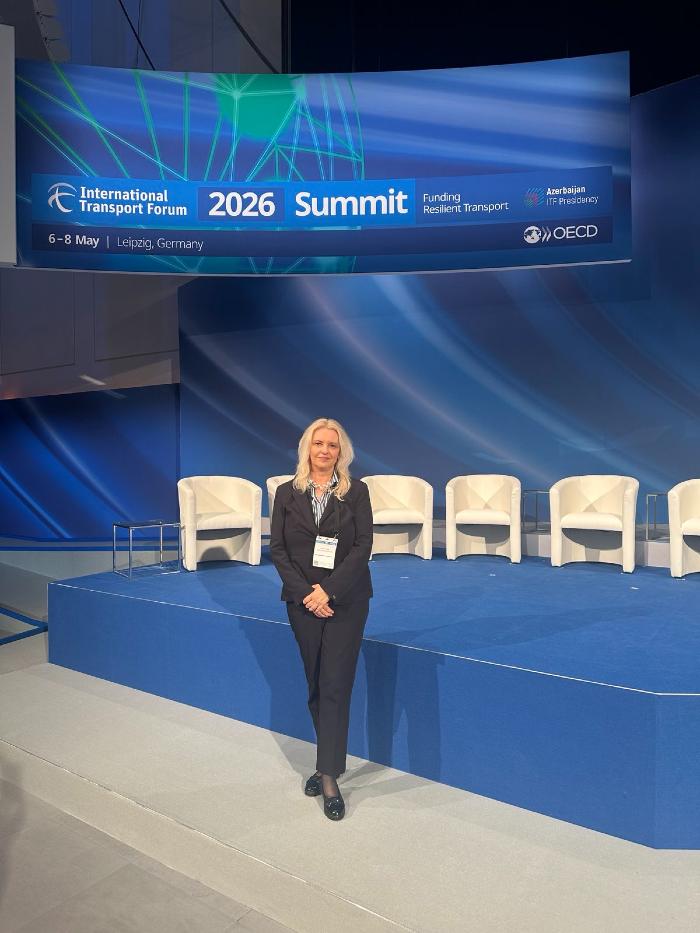
This year's summit focused on financing models and investment strategies aimed at enhancing the resilience, efficiency, and reliability of transport systems in the face of increasingly pronounced global challenges, including climate change, energy and geopolitical crises, as well as the accelerated digital transformation of the transport sector. A particular emphasis of this year's summit was on strengthening the resilience of transport systems in the context of global challenges, improving international connectivity, and implementing reforms to enable a safer, more efficient, and sustainable development of the transport sector. During numerous panels and bilateral meetings, topics such as financing transport infrastructure, digitalization, workforce development, and the application of modern technologies in traffic management were discussed.
Throughout the three-day programme, numerous panels, expert discussions, and bilateral meetings were held, focusing on the digitalization of the railway system, interoperability, the development of sustainable mobility, traffic safety, the application of artificial intelligence, and modern approaches to managing transport infrastructure. The summit brought together over 1,200 participants from more than 80 countries, including transport ministers, representatives of international financial institutions, European agencies, railway companies, and leading experts in the field of transport.
As part of the programme, a professional study visit was organised to the Operational Centre for Railway Traffic Management in Leipzig, where participants had the opportunity to familiarise themselves with modern systems for monitoring and coordinating railway traffic, digital tools for network management, and solutions that contribute to increased safety, capacity optimisation, and more efficient responses in emergency situations. This operational centre is one of the most modern facilities of its kind in Europe, from which railway traffic is monitored, controlled, and managed in real time across a network of nearly 6,000 kilometres of track.
The participation of ŽPCG representatives in this international event represents an important opportunity for exchanging experiences with European partners and keeping abreast of contemporary trends in the field of railway transport, particularly in the areas of modernisation, digitalisation, and the development of sustainable mobility.
Rail transport in Montenegro continues to actively follow European initiatives and standards in the field of railway traffic, with the aim of improving service quality and developing a modern, efficient, and sustainable railway system in Montenegro.